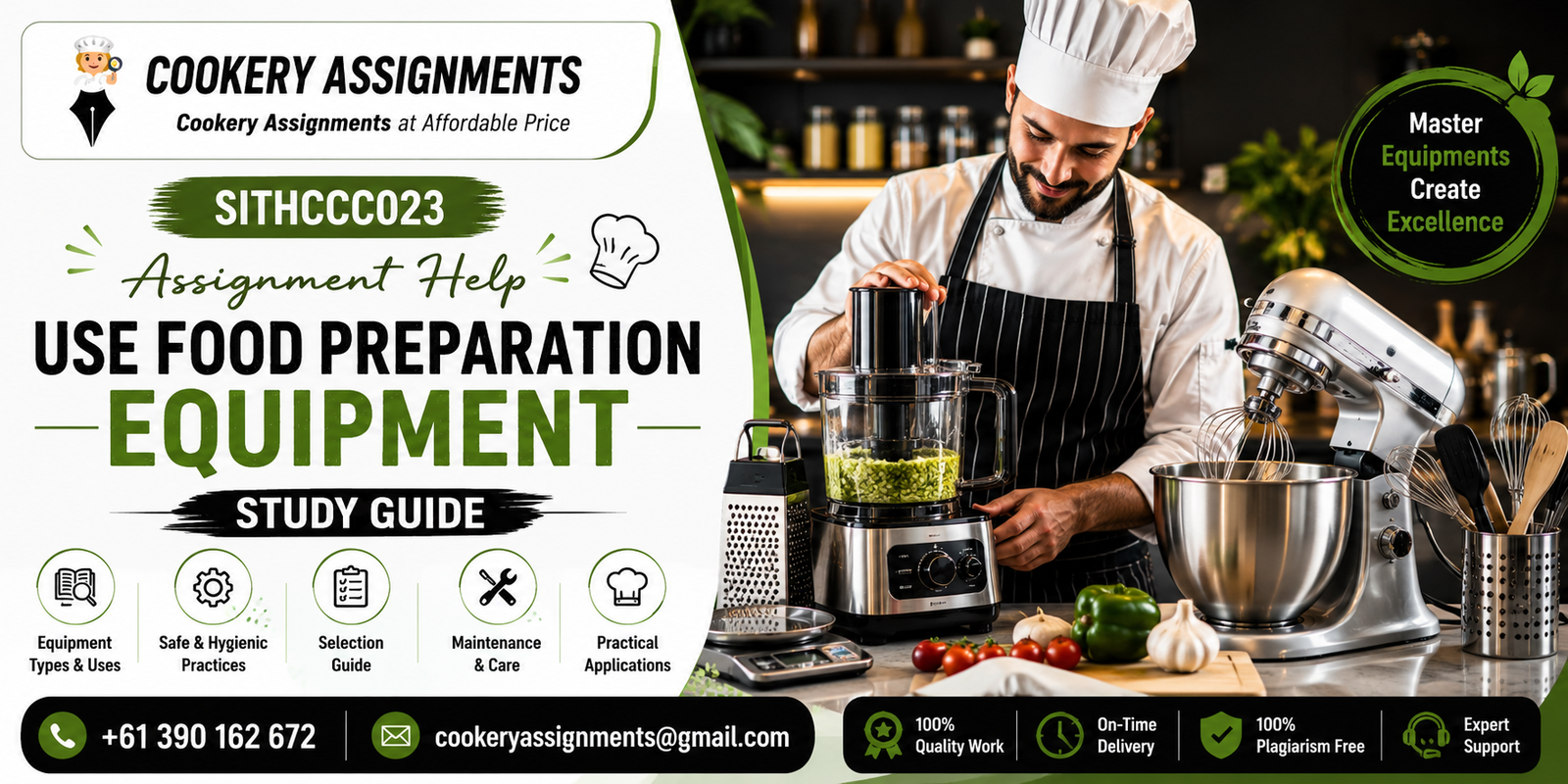
The unit SITHCCC023 Use food preparation equipment is one of the first practical units in the SIT30821 Certificate III in Commercial Cookery, and it underpins almost everything else you do in a professional kitchen. Before you can cook consistently, you need to select, use, clean and maintain commercial food preparation equipment safely and efficiently. This guide explains what the unit covers, the equipment you must master, what your assessor looks for, and how to prepare so you pass with genuine, job-ready skills.
SITHCCC023 develops your ability to choose the correct equipment for a task, assemble and use it safely, and clean and maintain it to commercial standards. Employers and assessors treat this as a core safety unit: misusing a slicer, mandoline or food processor is one of the most common causes of kitchen injury, so the unit places real emphasis on safe handling, guards, and correct procedures. You will typically study it alongside food safety units such as SITXFSA005, because hygiene and equipment use go hand in hand.
Commercial kitchens use a wide range of equipment, and the unit expects you to be confident with the main categories below, including selecting the right tool for each job.
A key skill in this unit is choosing the most appropriate and efficient equipment for each job. For example, a food processor is ideal for quickly chopping large quantities, but a chef knife is better for precise, even dice on a small amount. Assessors want to see that you can justify your choices in terms of efficiency, food quality, safety and hygiene – not simply reach for whatever is closest.
Safety is the heart of SITHCCC023. You are expected to assemble equipment correctly, use all guards and safety features, keep hands and utensils clear of moving parts, never leave powered equipment unattended, and follow the manufacturer and workplace instructions. You should also report any faulty or damaged equipment rather than using it. Demonstrating calm, deliberate, safe handling is exactly what earns marks in the practical.
After use, equipment must be dismantled where required, cleaned, sanitised and stored correctly. You should understand the difference between cleaning (removing visible dirt) and sanitising (reducing bacteria to safe levels), follow the correct order, and carry out basic maintenance such as checking and sharpening knives or reporting blunt blades. Correct cleaning prevents cross-contamination and extends the life of expensive equipment.
SITHCCC023 assessment combines knowledge questions with a practical demonstration, usually supported by a logbook.
Expect questions on the purpose and safe use of each piece of equipment, the correct cleaning and sanitising procedures, manufacturer instructions, and basic maintenance. You may be asked to match equipment to tasks or to describe the safety features of a slicer or mandoline.
You must safely select, assemble, use, clean and store a range of equipment while completing real preparation tasks. Assessors watch your safety practices, efficiency, technique, and how you maintain a clean and organised station throughout.
Many RTOs require a record of the equipment you used, the tasks completed, dates and supervisor sign-off. Keep it accurate and up to date.
Spend time physically handling each piece of equipment in your training kitchen until selection, safe use and cleaning feel routine. Write short notes in your own words on the purpose, safety features and cleaning steps for each item. Then complete a mock practical where you select and use several pieces of equipment for a real task, and review anything that felt rushed or unsafe. Always confirm your RTO assessment instructions so you know exactly which equipment you must demonstrate.
It is one of the more approachable practical units, but it is taken seriously because it is safety-focused. Confident, safe handling and clear knowledge of cleaning procedures are what you need.
Knives and hand tools, scales, a food processor, a slicer or mandoline, and a planetary mixer are all common. Always check your RTO instructions.
Cleaning removes visible dirt and food residue, while sanitising reduces bacteria to a safe level. In a commercial kitchen you clean first, then sanitise.
Stop using it, label or isolate it if required, and report it to your supervisor. Never attempt to use damaged equipment.
If any part of the unit is unclear, our cookery tutors can help you understand the equipment, the safety procedures and the assessment requirements so you complete your own work confidently.
At Cookery Assignments we help commercial cookery and hospitality students across Australia understand their units and prepare for assessment the right way. For guidance with SITHCCC023 or any other unit, call +61 390 162 672 or email cookeryassignments@gmail.com. Find us on Google here: Cookery Assignments on Google.
Get original papers written according to your instructions and save time for what matters most.

The reference papers provided by CookeryAssignments.com should be used as model papers only. Students are not to copy or submit them as it is. These reference papers are strictly intended for research and reference purposes only.